
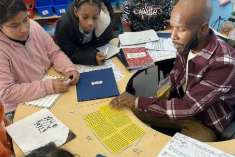
A Q&A with Brandon Woodland, Founding UDL Teacher at Bridges PCS
At the DC Special Education Cooperative, Demonstration Classrooms give educators a chance to see evidence-based practices in action. One of those classrooms is at Bridges Public Charter School, where Brandon Woodland serves as the founding Universal Design for Learning (UDL) teacher. Using the UDL framework, Brandon models how intentional instructional design can remove barriers and increase engagement for all students, including students with disabilities. Below, Brandon reflects on how UDL has shaped his teaching and what he’s seeing in his classroom.
What inspired you to say “yes” to becoming the UDL Demo teacher?
Before implementing Universal Design for Learning, my instructional approach often involved teaching the curriculum first and then adjusting if students encountered difficulties. As I began integrating UDL principles, I shifted to planning lessons more intentionally—thinking in advance about how students would access the content, stay engaged, and demonstrate their understanding. That shift made my teaching more flexible and reflective. It also made my classroom more student-centered. When instruction is designed to support different learning needs, students become more engaged, more confident, and more willing to participate.
How has the UDL framework changed the way your students engage with learning?
UDL has created a space where flexibility, collaboration, and student choice are prioritized. Instead of relying on a one-size-fits-all approach, students explore concepts through different activities, materials, and levels of support. One of the biggest changes I’ve noticed is an increase in student engagement and participation. When students have multiple ways to interact with the content and show what they know, they become more active participants in their learning.
What practice has become “non-negotiable” in your classroom because of your experience with UDL?
Students bring different strengths, needs, and learning styles into the classroom. Because of that, instruction cannot rely on just one method of teaching. Providing multiple means of representation, engagement, and expression allows all students to participate meaningfully in the learning process. For example, instead of only relying on written assignments, students can demonstrate understanding through discussions, visual models, hands-on activities, or digital tools. Supports such as visuals, guided practice, and collaborative learning opportunities ensure that students who may struggle with traditional methods still have a pathway to success.
How can UDL help schools rethink support for students with disabilities?
UDL shifts the focus from “fixing the student” to improving the design of instruction and the learning environment. Instead of treating supports as an add-on, educators design lessons that anticipate learner variability from the start. When schools plan instruction this way—providing multiple ways for students to engage, access content, and demonstrate learning—they reduce barriers and make high-quality instruction accessible to all students.
What message would you share with other DC educators?
Design instruction for all learners from the start. Inclusive design doesn’t just help some students. It strengthens the learning experience for everyone.
A classroom to watch!
Brandon’s work is also gaining national attention. His classroom at Bridges Public Charter School was recently featured in a video produced by CAST, the organization that developed the Universal Design for Learning framework. The video showcases how Brandon’s classroom brings UDL principles to life, demonstrating how intentional instructional design, student choice, and flexible learning structures help remove barriers and increase engagement for all learners.