
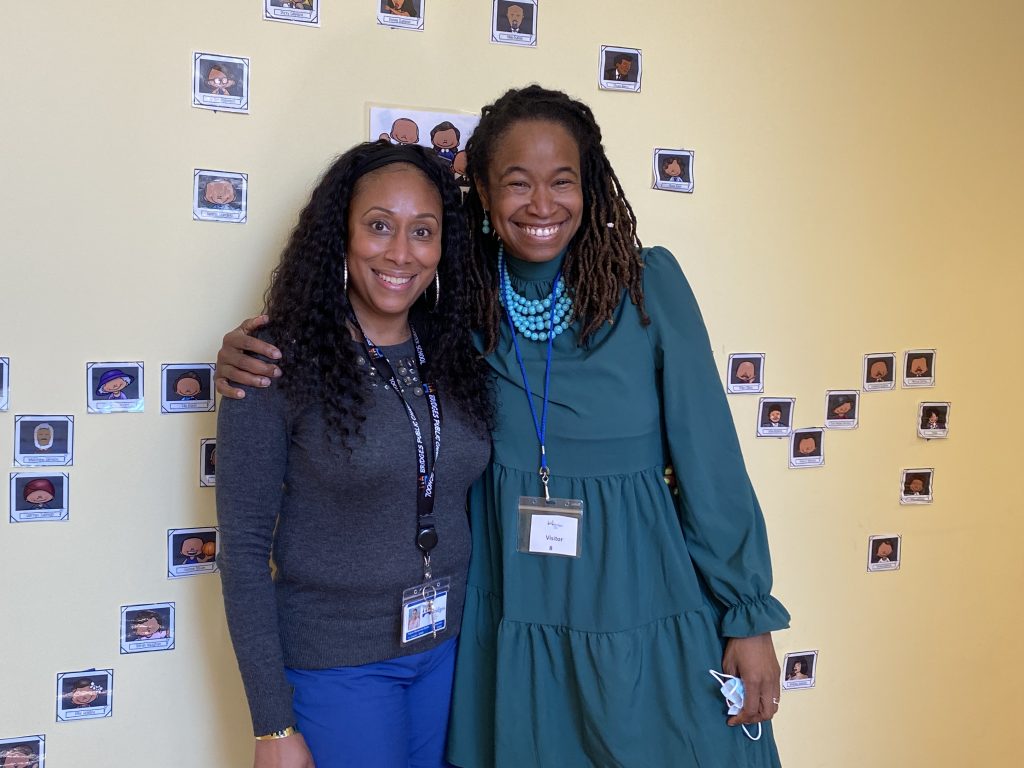
At the 2025 UDL-CON International Summit, Meagan Alderton (DC Special Education Cooperative), Nakita Packer (Bridges Public Charter School), and Ruth Templeton (CAST) facilitated “UDL in Action: Unlocking Learner Potential Through Systemic Design,” a session highlighting how Universal Design for Learning (UDL) can drive systemic change and foster equity in schools. The presentation centered on the Schoolwide Implementation Criteria (UDL-SIC), a robust framework that guides schools in embedding UDL across four domains: culture and environment, teaching and learning, leadership and management, and professional learning. The criteria emphasizes data-driven continuous improvement cycles and provides schools with a roadmap for sustainable implementation.
Case Study: Bridges Public Charter School
Using Bridges PCS as a case study, we traced a multi-year journey of implementation, beginning with the building of the Co-op’s UDL Demonstration Classroom in 2019. As a part of our network of demonstration classrooms, this UDL Demo has become one of several professional learning labs for teachers. Internally, Bridges PCS has used the model classroom to support school-wide expansion initiatives, and teachers at Bridges PCS have engaged in professional learning cycles that include personalized coaching, instructional rounds, video reflection, and CAST-facilitated workshops. This multi-layered approach is working to shift mindsets, build teacher capacity, and gradually align classroom practice with UDL Guidelines 3.0.
Key Outcomes and Lessons Learned
In sharing our journey we provided insights into lessons learned:
- Professional Learning as a Catalyst: Ongoing coaching, modeling, and demonstration classrooms have proven essential in helping educators internalize and apply UDL practices.
- Leadership Integration: By updating leadership and teacher job descriptions, aligning budgets and schedules with UDL priorities, and embedding UDL into schoolwide professional development, schools can move from isolated practices toward systemic adoption.
- Equity in Action: UDL practices increase access and agency for students with disabilities, multilingual learners, and economically disadvantaged student populations. When implemented with fidelity, the framework ensures that all learners are included and positioned to thrive.
Looking Forward
At the Co-op we understand that UDL is a continuous improvement process, not a checklist, and we remain committed to supporting our member schools with the tools, training, and partnership needed to build inclusive systems where every student can thrive. We know that systemic implementation requires sustained commitment to data-driven reflection, inclusive professional learning, and leadership alignment. At UDL CON we left participants with a clear message: when schools intentionally design for learner variability and embed UDL across systems, they create the conditions for every student to succeed.


